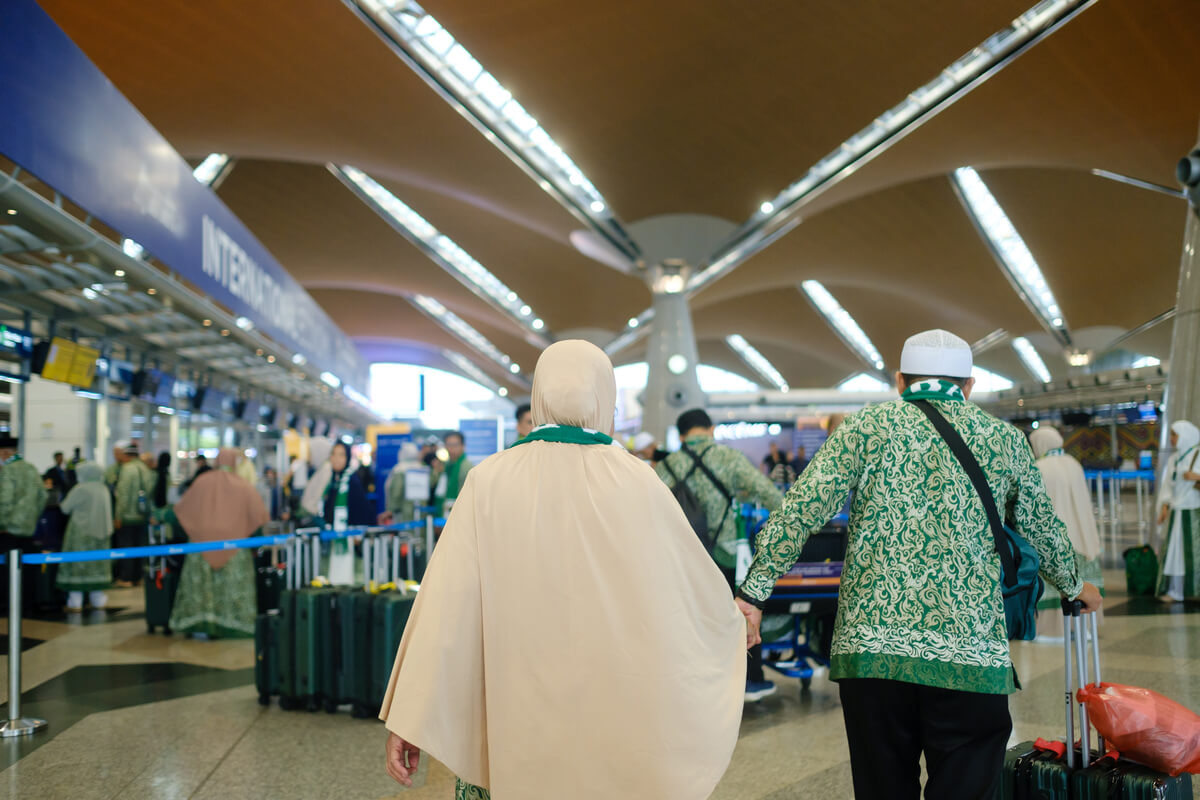
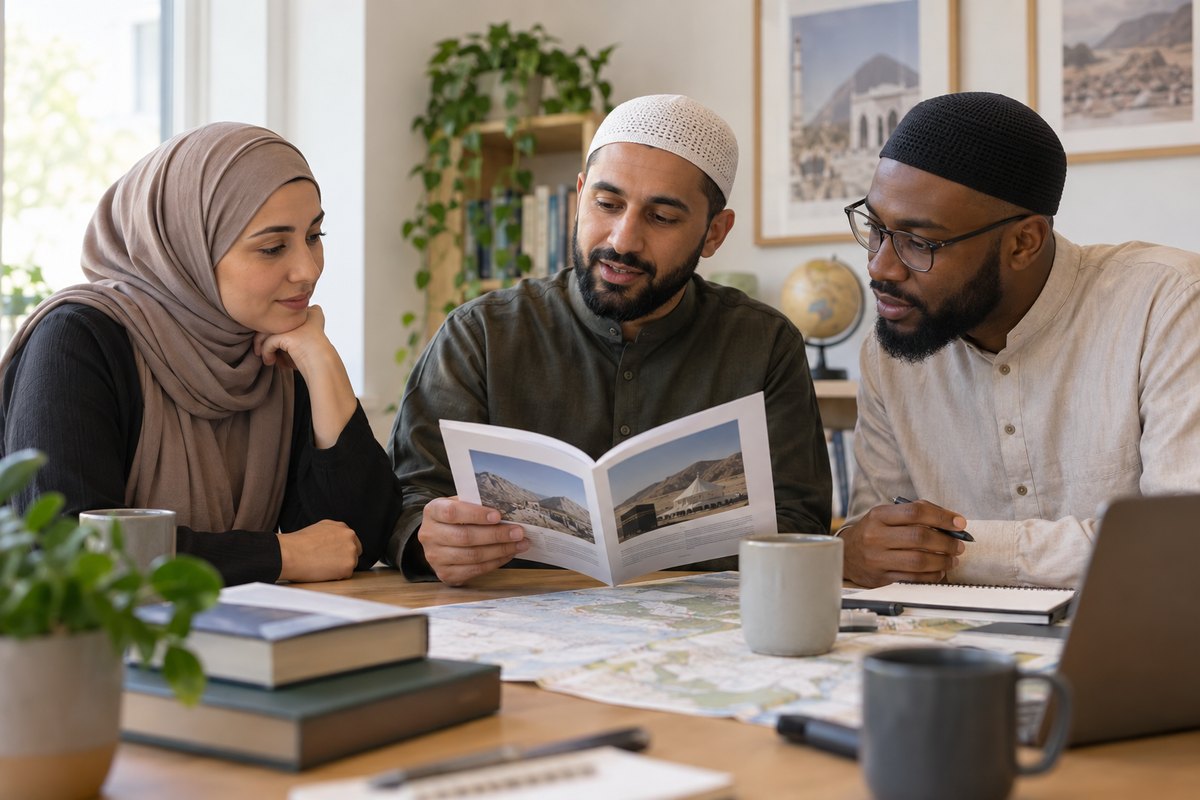
A Hajj packing list usually covers passports, clothing and toiletries, yet it is often the small practical items that make demanding days easier. Pack lightly enough to manage your own luggage and always follow current airline, security and Saudi rules. These ten easily forgotten items can help you stay organised without carrying unnecessary weight.
1. A clearly labelled shoe bag
Footwear is removed frequently, and identical sandals can be difficult to recognise. Carry a lightweight drawstring shoe bag marked discreetly with your name or group reference. Keep it with you rather than leaving shoes where they may block walkways.
2. Anti-chafing protection and blister care
Long distances, heat and repeated walking can cause painful rubbing. Pack suitable unscented anti-chafing protection for use during ihram, plus blister plasters and a small basic foot-care kit. Break in all footwear before travel; Hajj is not the time to test new sandals.
3. A compact power bank and short charging cable
Your phone may hold hotel details, group contacts, maps and travel documents. A charged power bank is useful during long transfers and ritual days. Choose a compliant model, keep it in hand luggage for flights and label both the device and cable.
4. Printed emergency and accommodation details
Phones can lose power or connectivity. Carry a small card showing your full name, group leader’s number, hotel name and address, emergency contact and any essential medical information. Keep another copy inside your main luggage.
5. Rehydration support
Hot weather and physical exertion increase the risk of dehydration. Carry a reusable bottle where permitted and ask a pharmacist or clinician whether oral rehydration products are appropriate for you. Do not rely on supplements instead of regular water, rest and medical help when symptoms are concerning.
6. A small unscented personal-care set
Separate a few ihram-appropriate items from your normal toiletries: unscented soap, wipes, moisturiser and tissues. Check ingredients and seek religious guidance if you are uncertain about a product. Keep the set small enough for your day bag and respect hand-luggage liquid limits.
7. Spare prescription information
Take enough prescribed medicine for the journey, plus a little contingency where your prescriber advises it. Keep medicines in original labelled packaging and carry a copy of your prescription or clinician’s letter when required. Never share medication with another pilgrim.
8. A simple laundry kit
A few sealable bags, travel detergent sheets and a short washing line can make it easier to separate damp or used clothing. Sealable bags are also useful for documents during rain or spills. Avoid overpacking full-size household products.
9. Earplugs and an eye mask
Shared rooms, transport and changing schedules can make rest difficult. Comfortable earplugs and an eye mask take almost no space and may help you sleep when the opportunity arises. Keep alarms audible and agree wake-up arrangements with room companions.
10. A pocket notebook and permanent pen
A notebook works when your battery does not. Record meeting points, coach numbers, important timings, questions and reflections. A permanent pen also helps with luggage labels and forms.
Before you close the suitcase
Review the latest health advice from TravelHealthPro, check airline baggage rules and confirm what your package already supplies. Keep valuables and essential medication in hand luggage, but make sure restricted items are packed correctly. Our travel team can explain the practical inclusions for your selected package.